
Vysya Bank Ltd has informed BSE that the Board of Directors of Vysya Bank Ltd at their meeting held on January 30, 2003

Kotak Mahindra Bank's acquisition of ING Vysya Bank is the country's first ever amalgamation of a profit earning entity post the global financial meltdown in 2008.

The Indian rupee and government bonds are expected to face volatility in Samvat 2083, influenced by geopolitical developments in West Asia, crude oil prices, domestic inflation, and foreign capital flows, leading to cautious investor sentiment.

Reserve Bank of India (RBI) Governor Sanjay Malhotra stated that surplus liquidity in the banking system is expected to drain within the current financial year, utilising tools like currency leakage, sell-buy swaps, open market operations (OMOs), and variable rate operations.
Karur Vysya Bank on Friday said it would introduce mobile banking by October end.\n\n

The deal is the first major bank takeover in 4 years

India's banking system is grappling with a persistent liquidity surplus exceeding Rs 5 trillion, driven by significant government spending and bond redemptions, leading market participants to anticipate the Reserve Bank of India will step up Variable Rate Reserve Repo operations to manage the excess funds.

Private lender Kotak Mahindra Bank Ltd said on Thursday its board had approved the acquisition of local rival ING Vysya Bank Ltd, in which Dutch lender ING Groep NV owns about 43 per cent, in an all-stock deal.
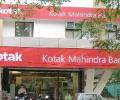
In November, Kotak Mahindra Bank had announced the buyout of ING Vysya Bank in an all-stock deal valued at Rs 15,000 crore (Rs 150 billion).
The board of directors of ING Vysya Bank, at its meeting held on May 28 have approved the bank's sale of 14.87 per cent stake in ING Vysya Life Insurance Company to Gujarat Ambuja Cements for Rs 60.9 crore (Rs 609 million).
Shares of Kotak Mahindra Bank on Friday surged nearly 9 per cent after the private sector lender announced the acquisition of ING Vysya Bank in an all-stock deal valued at Rs 15,000 crore (Rs 150 billion).

To meet liquidity pressure because of advance tax outflows this month, the Reserve Bank of India (RBI) has adopted a measured approach with its latest announcement of open-market operations (OMOs), worth Rs 1 trillion.

Banks recorded a higher growth year-on-year (Y-o-Y) in raising deposits during the second quarter of financial year 2025 (Q2FY25) compared to Q1FY25, owing to intensified efforts to raise liabilities by offering higher rates and innovative schemes.

Yes, the entry of private bankers, particularly with global experience will add value to PSBs, points out Tamal Bandyopadhyay.

In a move to strengthen governance in private sector banks and wholly-owned subsidiaries of foreign banks, the Reserve Bank of India (RBI) on Wednesday directed them to have at least two wholetime directors. Lenders that do not meet the requirement will have to submit the names for the RBI's approval within four months. Banks need prior approval from the banking regulator for the appointment of wholetime directors.

Reflecting strong momentum in business, commercial banks, including one public sector lender, reported a year-on-year (YoY) growth in advances. This was higher than or around the banking sector trend in the first quarter ended June 2023. Bank of Maharashtra said its loans expanded by 25 per cent YoY to Rs 1.75 trillion. This pace was much higher than the banking system's 15.4 per cent growth till June 16, 2023, according to Reserve Bank of India (RBI) data.

The cost of deposits is on the rise, but banks can't raise interest rate on close to 60% of their loan books, points out Tamal Bandyopadhyay.

Net NPAs increased to Rs 36,260 crore in the December quarter from Rs 34,843 crore in September and Rs 33,116 crore in December 2023, observes Tamal Bandyopadhyay.

Banks have issued Rs 7.78 trillion worth of CDs in the current calendar year until August 2024, compared to Rs 4.9 trillion in the same period of 2023, registering a 59 per cent growth
Banks reported muted treasury gains during April-June of FY25 (Q1FY25) following Reserve Bank of India's (RBI's) revised norms on investment portfolio effective from April 1, 2024, despite softening of government bond yields. "Banks have reported muted treasury gains during Q1 of FY25 despite softening of yields across the curve. "The main reason was change in the investment valuation and classification guidelines by the RBI.
Banks are preferring instruments with higher premium over government securities for their held-till-maturity (HTM) portfolio, following the new investment norms, which came into effect from April 1. They are stocking up on corporate bonds and state government securities to boost yield on their portfolio, according to market participants. "Definitely, if there is a good spread available and without lower credit risk, those instruments will be favoured to boost the yield on the portfolio.

CPGRAMS -- an online platform available to citizens 24x7 to lodge their grievances to public authorities on service delivery -- has existed for close to two decades. But it has never been this active, points out Tamal Bandyopadhyay.
The Reserve Bank of India (RBI) has extended the trading hours for the interbank call money market from July 1, and that of repo and tri-party repo markets from August 1. Market participants said the decision is intended to help reduce the large Standing Deposit Facility (SDF) balances held by banks with the RBI, thereby addressing liquidity mismatches.
More than half a dozen private-sector banks are awaiting regulatory approval for the appointment of a second whole-time director on their boards.

The rupee has held its ground against the US dollar in the 2025 calendar year so far, but depreciated significantly against the euro and pound. It fell by 6.83 per cent, and 5.44 per cent against the euro and pound respectively, as the two currencies strengthened significantly against the greenback during the period.

Kotak Mahindra Bank chief Uday Kotak has assured that there will not be "any dramatic" reduction immediately in the number of employees following the merger of ING Vysya Bank.
HDFC Bank had opened multiple demand accounts which were used for manipulation of the IPO allotment process in the last few years, but those were not held in benami names.
Four banks -- Bank of Rajasthan (16 per cent), ING Vysya Bank (14.66 per cent), South Indian Bank (10 per cent) and Karnataka Bank (8.67 per cent) -- have sold their stakes aggregating 49.33 per cent in BhOB to IOB.

Banks submitted bids amounting to Rs 4.75 trillion, around 2.5 times of the notified amount of Rs 1.75 trillion, at the Variable Rate Reverse Repo (VRR) auction conducted by the Reserve Bank of India (RBI) on December 22, a day after the liquidity deficit in the banking system widened to Rs 2.5 trillion. In the most recent VRR auction held by the RBI on December 15, bids totaling 2.7 times the notified amount were received. Banks secured Rs 1 trillion at a weighted average rate of 6.63 per cent.

Several Indian banks have alerted their customers not to download apps from any source other than official app stores. Banking customers are being targeted by a new type of mobile banking malware campaign using SOVA Android Trojan. This malware captures the credentials when users log onto their net-banking apps and access bank accounts. The new version of SOVA appears to be targeting more than 200 mobile applications, including banking apps and crypto wallets.
Union Finance Minister P Chidambaram said in the Lok Sabha the Reserve Bank of India and the Securities and Exchange Board of India have taken up corrective measures in the IPO scam.
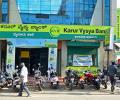
'We will test the waters, ferret out information through our business correspondents, and only then open a branch'
